Fantasy Football Draft Kit UDK
- 4.9
- Rating
- 100.00K
- Installs
- Free
- Price

 Analysis by App-foxy
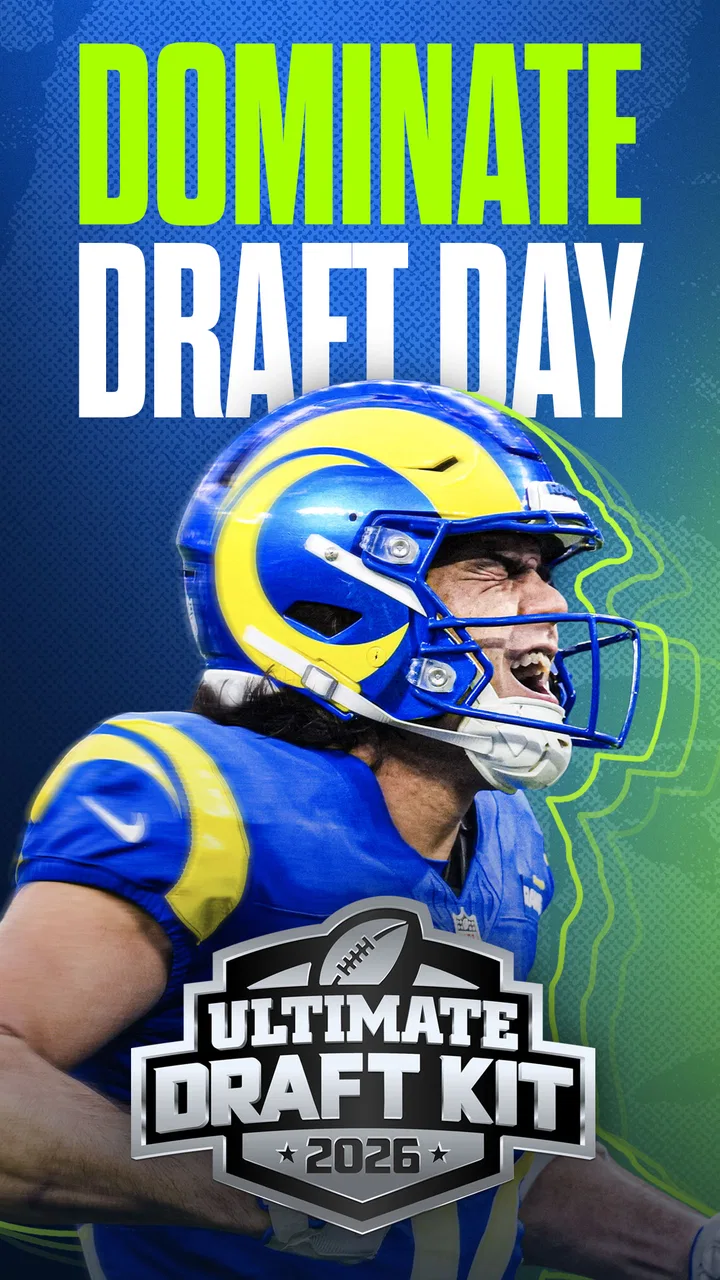
I approached Fantasy Football Draft Kit UDK as a beginner rather than as someone who already knows every fantasy football abbreviation. That made its purpose easy to understand: it is a sports app from The Fantasy Footballers built around preparing for a fantasy football draft, with the current focus on the 2026 Ultimate Draft Kit. The app is free to install, although some in-app items range from $24.99 to $143.99, so the first thing I would tell a new user is to explore the free experience before deciding whether the paid material fits their league.
My overall impression is that this is most useful when you treat it as a draft companion, not as a replacement for watching games or learning the sport from scratch. It helps turn a messy collection of player opinions, rankings, and last-minute decisions into something you can consult when your draft clock is running. That distinction matters. If you want a simple scores app, a news feed, or a fantasy league manager, this is not the obvious first choice. If your main worry is arriving at draft night without a plan, it has a much clearer role.
Getting comfortable with the draft-focused approach
The app sits in the Sports category and has earned a 4.9 average from around 7K ratings, with roughly 1.1K written reviews. It has passed 100K installs, which gives me confidence that it has found a real audience among fantasy football players rather than being a narrowly used experiment. Its Everyone content rating also makes it approachable for households and leagues where younger players may be involved, although the subject matter is still aimed at people making fantasy roster decisions.
You May Also Like

 Blood Strike: 2.5 Anniversary
Blood Strike’s Loadouts Turn Every Drop Into a Tactical Gamble
A close look at Blood Strike’s custom loadouts: how fast access to signature weapons reshapes its battle royale rhythm, rewards preparation, and narrows the gap between fights.

 Pandora - Music & Podcasts
Pandora’s Music Is Easy to Start, but Harder to Recover
Pandora’s strength is its low-effort path from a seed to a station. Its weak spot is how much confidence it asks you to place in connection, setup, and quiet recovery.

 8 Ball Pool
 Is Built on Rivalries, Rematches, and Routine
A close look at the rivalries, rematches, shared routines, and unanswered safety questions that turn a quick pool match into a persistent mobile community.

 Samsung Music
’s Quiet Strength Is Playing What You Already Own
Its reach comes less from spectacle than from dependable access to a personal library. That simplicity is both the app’s strongest retention engine and its ceiling.

 AccuWeather: Weather Radar
AccuWeather Review: A Quick, Clear Forecast for Everyday Decisions
For everyday plans, the best forecast is the one you can understand quickly. AccuWeather makes rain timing, radar, and local conditions easy to act on, with a few trade-offs.

 Hill Climb Racing
Why Hill Climb Racing Still Turns Crashes Into One More Run
A tiny car, a bumpy hill and one more upgrade: Hill Climb Racing keeps resurfacing because its simple chaos makes every near-miss feel personal.
More From Our News Desk
View All News


The developer, The Fantasy Footballers, gives the product a recognizable identity. This is not presented as a neutral spreadsheet with a few names in rows. The experience is shaped around draft preparation and the judgment calls that come with it: deciding when to select a position, comparing players who look similar, and avoiding the panic that often arrives after a surprising early pick. I found that focus more valuable than a huge collection of unrelated fantasy tools.
Before installing, I would set a realistic expectation. No draft kit can know exactly how the people in your league will behave. Rankings can guide a decision, but they cannot predict a friend reaching for a quarterback, a favorite player falling several rounds, or a league rule that changes the value of a position. The best use of this app is to create a flexible plan and give yourself a reason for each selection.
The current version is 8.3.14 and it runs on Android 7.0 or later. That makes it accessible on many older Android devices, which is helpful if you keep a spare phone for draft night or do not upgrade often. I would still install and open it before the draft itself. A draft is a poor moment to discover that you need to learn the layout, sign in, or decide which parts of the kit you actually want to use.
What I would do immediately after installation
My first pass would be deliberately simple. I would open the app, look for the material connected with the Ultimate Draft Kit, and identify which information is available without buying anything. Then I would check how player information is organized and whether the presentation feels comfortable on my phone. This small orientation step prevents a common mistake: paying for a feature before knowing whether its format suits the way you make decisions.
I would also keep my league settings nearby. Even a strong general draft guide becomes less useful when your league uses unusual scoring, a different roster structure, or a format that changes the importance of certain positions. The app can help with football knowledge, but you remain responsible for translating that advice into your league. I would write down the number of teams, starting positions, bench spots, and scoring details before relying heavily on any recommendation.
For a first-time player, the most useful setup is not a complicated personal system. It is a short list of priorities. I would decide which positions I want to understand first, note a few players I feel comfortable selecting, and mark the areas where I am willing to wait. This turns the app from an endless stream of names into a preparation tool with a purpose.
There is also a practical trade-off between using a phone and using a larger screen. A phone is convenient during a live draft because it stays beside your league platform, but dense player information can require more scrolling. I would use the phone for quick checks and pre-draft study, then keep a simple handwritten or saved backup of my main priorities. That is not a criticism of this particular app; it is good draft-night discipline whenever a decision has to be made quickly.
Finding the first meaningful success
The first success I would aim for is not building a perfect mock roster. It is making one confident, explainable draft decision. Open the player guidance, choose a position you understand least, and compare several realistic choices instead of staring at one favorite. Ask yourself why one player belongs ahead of another for your league. That exercise teaches you how to read the kit and gives you a repeatable method for later rounds.
A useful workflow is to separate preparation from live drafting. Before the event, browse enough to recognize the names and understand the broad priorities. During the draft, use the app only to answer a specific question: whether to take the best remaining player, fill a roster need, or wait on a position. This keeps the tool from becoming a distraction. Constantly refreshing every available player can create more anxiety than clarity.
I would also practice with a deliberately difficult scenario. Imagine that another manager selects the player you expected to take, then use the app to identify two or three alternatives. This is where a draft kit proves its value. A plan that works only when every preferred player is available is not really a plan. The stronger habit is learning how to move to the next reasonable option without treating one missed pick as a disaster.
For someone new to fantasy football, a realistic evening might look like this: you install the app after work, spend a short session learning the player pages, and then use it to prepare a position-by-position shortlist. On draft night, you glance at that shortlist after each selection and consult the app when the room takes an unexpected turn. The meaningful result is not that every pick feels obvious. It is that you stop making selections purely because a name is familiar.
One non-obvious benefit of this workflow is that it helps expose your own bias. I tend to remember exciting players more easily than dependable ones, so a structured draft reference makes me pause before choosing based on reputation alone. You may discover a different weakness: overvaluing your favorite team, chasing a position after a run has started, or filling the bench too early. The app is most effective when you use it to challenge those habits rather than confirm them.
Where new users can get confused
The word “draft kit” can sound like a complete automated drafting service, but I would not approach it that way. It is better understood as expert preparation and decision support. You still need to know your league’s settings, follow the draft room, and make the final selection yourself. If you expect the app to manage your league or remove every judgment call, you may find the experience less direct than expected.
Another possible source of confusion is the difference between the free app and paid in-app content. The app itself costs nothing to install, but the presence of purchases means that not every part of the experience should be assumed to be included. I would read each purchase screen carefully, compare what it adds to your preparation, and avoid buying simply because the draft is approaching. A beginner can often learn a great deal by first testing the basic navigation and deciding what problem a paid item would solve.
The 2026 wording in the store summary can also lead to an incorrect expectation if you are preparing for a different season. Draft material is time-sensitive by nature, so I would pay attention to the season attached to the kit before using it. A guide designed for one draft cycle should not automatically be treated as current advice for another. This is one of the few categories where freshness matters as much as presentation.
I would not confuse this app with a live score tracker either. Its value is concentrated around draft preparation, player evaluation, and draft-day choices. If your priority is following every game, checking league standings, or managing transactions inside a particular fantasy platform, a dedicated league app may be a better companion. You can use both, but they solve different problems.
There is a further limitation for experienced players who already maintain detailed spreadsheets or personal models. The app may feel faster and more readable than maintaining everything manually, but it may not match a highly customized system. A serious analyst who wants to adjust every assumption may prefer a spreadsheet or specialist research workflow. I see this product as especially strong for players who want informed guidance without building their own database.
Turning advice into a personal draft plan
After the first successful session, I would stop browsing randomly and build a compact routine. Start with league settings, review the positions that create the most uncertainty, and make a shortlist of players you would be happy to select at different stages. The important part is not copying every ranking. It is understanding the shape of your choices so that you can adapt when the draft does not follow your preferred script.
One useful trade-off is between safety and upside. A player who feels dependable may help stabilize a roster, while a riskier choice may offer more potential but create a larger gap between a great outcome and a disappointing one. The app can inform that conversation, but your roster construction should reflect your comfort level. In a casual league with friends, I might accept more experimentation. In a league where I care deeply about consistency, I would use the guidance to narrow risk rather than chase every exciting possibility.
I would also use the kit to prepare questions before draft night. Which positions am I comfortable waiting on? Which roster slot is hardest for me to judge? What will I do if a run on one position begins? Having these questions ready is more valuable than memorizing a long list of names. It gives the app a precise job each time you open it.
A second non-obvious tip is to review your decisions after the draft while the reasoning is still fresh. Do not judge the roster only by whether a player scores well later. Instead, note whether you followed your plan, whether you panicked after a run, and where the app helped you move past uncertainty. That reflection improves your next draft more reliably than simply searching for a different ranking source.
For users deciding whether to pay, I would ask one practical question: will the extra material change a decision you are currently struggling with? If the answer is yes, a paid item may be easier to justify. If you are still unsure about league settings, roster construction, or the basic interface, purchasing more information will probably add noise rather than confidence. The free entry point makes it sensible to learn the workflow first.
Who should use it and who should choose something else
I would recommend this app to a first-time fantasy football manager who wants a guided way to prepare, especially someone who feels overwhelmed by the number of players and positions. It is also a good fit for a returning player who understands the game but wants a more organized draft reference than scattered notes. The app’s narrow purpose is a strength for those users because it keeps attention on the moment that matters most: making a roster before the season begins.
I would be more cautious about recommending it to someone who only wants live league management. If your main needs are waiver claims, trades, matchup scores, or standings, choose the official app for your fantasy platform or another tool built around those tasks. I would also point highly analytical users toward a customizable spreadsheet or research service if they need to create their own projections and scoring adjustments.
Another reason to skip it is if you dislike paid upgrades on principle. Although the app is free, the in-app purchase range is substantial enough that you should decide your budget before exploring premium material. You can still use the free starting point, but anyone expecting every advanced resource to be included may feel frustrated. That is a purchasing concern, not a reason to dismiss the draft guidance itself.
My next step after the first draft
Once I had used the app to make a few practice decisions, I would keep it available as a reference rather than stare at it continuously. I would prepare a short personal plan, check the app when the draft creates a genuine dilemma, and leave enough room for my league’s behavior. That balance is important: the app should make me calmer and more deliberate, not turn every pick into a search for permission.
The strongest part of the experience is the way it gives a beginner a path from uncertainty to action. You install it, learn what the draft kit is trying to help with, connect the guidance to your own league settings, and practice choosing between alternatives. That is a much more useful first step than simply scrolling through player names and hoping confidence appears.
My final view is positive, with clear boundaries. Fantasy Football Draft Kit UDK is a focused Sports app from The Fantasy Footballers, free to start and suitable for Everyone, with a current version of 8.3.14 for Android 7.0 and newer. Its 4.9 average and audience of over 100K installs suggest that many fantasy players find the approach worthwhile, but popularity does not remove the need to check your league rules or your spending comfort.
I would recommend it to anyone who wants a calmer, more structured fantasy football draft. Use it to prepare, compare, and recover when your preferred pick disappears. Do not expect it to manage the entire league or replace your judgment. For a first-time user, that is actually reassuring: you do not need to master everything at once. You only need to use the guidance for the next decision, then build from there.
FAQs for Fantasy Football Draft Kit UDK
01What is Fantasy Football Draft Kit UDK?
Fantasy Football Draft Kit UDK is a draft-preparation app designed to help fantasy football managers research players, compare rankings, build draft strategies, and make informed selections on draft day. It typically combines player projections, rankings, tier information, cheat sheets, and customizable tools in one place, making it useful for both newcomers and experienced players preparing for a fantasy league.
02Does Fantasy Football Draft Kit UDK support different league formats?
The app is intended to be useful across several common fantasy football formats, but the exact level of support can depend on the version and settings available on your device. Before drafting, users should review options for league size, scoring rules, roster positions, and draft type. Adjusting these details is important because player values can change significantly between standard, PPR, half-PPR, dynasty, and superflex leagues.
03Can I customize rankings and create my own draft strategy?
One of the most useful reasons to use a draft kit is the ability to adapt general advice to your personal league. Fantasy Football Draft Kit UDK may allow users to review rankings, organize players by position or tier, and apply league-specific preferences. You should check the available customization tools before downloading, especially if you want to adjust projections, mark targets and sleepers, or prepare a personalized cheat sheet.
04Does the app require an internet connection during the fantasy draft?
Internet requirements can vary depending on which features you use. Basic information that has already been downloaded or stored may remain accessible offline, while updated projections, news, player status reports, synchronization, and other live features generally require an internet connection. For the best experience, open the app before your draft, update its data, and confirm that important rankings are available if your connection becomes unreliable.
05Is Fantasy Football Draft Kit UDK suitable for beginners?
Yes, the app can be helpful for beginners because it brings many draft resources together instead of requiring users to research every player separately. New managers can use rankings, tiers, projections, and positional comparisons to understand draft value more easily. However, the app should be treated as a guide rather than an automatic decision-maker, since league settings, roster needs, injuries, and draft behavior still require personal judgment.
Pros
- Covers multiple fantasy football formats and scoring settings.
- Useful player rankings help speed up draft-day decisions.
- Supports offline access
- which is handy in poor-signal locations.
- Regular updates can reflect injuries
- news
- and changing player values.
- Clean layout makes player information easy to scan quickly.
Cons
- Some advanced tools may require a paid subscription.
- The app can feel overwhelming for first-time fantasy players.
- Player projections are estimates and may not match your league results.
- Customization may be limited for unusual scoring systems.
- Frequent data updates could use noticeable battery or mobile data.

Fantasy Football Draft Kit UDK
Gallery